A safe purchase depends on the title, current registry status, permits, contract and payment arrangement rather than on a town being described as safe. This guide explains those checks, compares six markets by likely use, and sets out what the tourism-development tax incentives known as CONFOTUR do and do not cover.
Everything here was verified against official Dominican sources on August 12, 2026.
Can foreigners buy property in the Dominican Republic?
Yes. Foreigners generally receive the same basic property-ownership rights as Dominican nationals. The 2026 ProDominicana Investment Guide states that foreign individuals and companies can acquire, lease, develop and transfer Dominican real estate under conditions similar to those applying to Dominicans. There is no requirement to use a bank trust, no general coastal ban on foreign ownership and no mandatory local partner.
That legal access should not be confused with three separate questions:
- Buying property does not by itself grant residency.
- You are not required to buy through a company, and doing so has tax and legal consequences of its own that need advice, not a sales pitch.
- “Same footing as locals” still requires the full document set: identity, tax registration, and, for entities, corporate papers and authority.
The same guide notes that transfers above 1,000,000 Dominican pesos (RD$), about US$17,000 at the central bank’s August 2026 reference rate, must include information about the payment method. Keep a documented trail for every payment.
Which title documents should a buyer verify?
Buyers should distinguish the Certificate of Title, the current legal-status certification and a Constancia Anotada that may still require deslinde. The registry system under Law 108-05 protects what is actually registered, but these documents do not establish the same thing:
- The Certificate of Title is, per the property registry’s own guidance, the state-guaranteed evidence of a registered right, tied to an individual cadastral designation and plan. It says who holds the right. A seller waving a copy of one proves little; your lawyer verifies the original against the registry and reconciles the owner, the matrícula, the exact parcel or condo unit, and the seller’s authority to sell it.
- The Certificación de Estado Jurídico del Inmueble is the current-status snapshot: it reveals the mortgages, liens, seizures, annotations, and restrictions recorded against the property today. The registry itself tells prospective buyers to obtain one. A title copy from 2019 would not reveal a mortgage recorded in 2025; the current certificate would.
- The Constancia Anotada and deslinde require particular care. Under the registry’s Regulation 790-2022, deslinde is the formal technical, judicial and registry process that locates and individualizes rights held under a Constancia Anotada into a title for an exact surveyed parcel. Until it is complete, the exact parcel has not yet been separately titled.
A pending deslinde, a numbered lot on a masterplan, physical possession or a copy of a title is not the same as a completed and verified title for the exact property.
A purchase that depends on a pending deslinde, subdivision or future condominium title may still be workable. The buyer’s own lawyer and a licensed surveyor should document the required steps, dependencies and remedies if the process stalls.
How does a Dominican purchase actually close?
A purchase is not complete until due diligence, the sale documentation, tax handling and registration have all been completed. The usual sequence is:
- Define what you are buying it for; use, rental, and exit determine which documents matter.
- Appoint your own Dominican lawyer before any material payment. The developer’s lawyer documents the developer’s deal.
- Verify seller, title, status certification, cadastral identity, permits, and condition before a material reservation.
- Sign a promise of sale that identifies the exact property or future unit, price and currency, conditions that must be met, delivery deadline, permitted extensions, consequences if either side defaults, refund procedure, transfer rights and the court or arbitration process for disputes.
- Control the money in writing. Record who legally holds each deposit, what evidence releases it and what backs a refund. Verify every wire instruction independently through a trusted channel before sending funds.
- Pay the transfer tax or obtain the exemption, sign the final sale document and file the ownership transfer. The registry requires the sale document, duplicate title, current tax status from the Dominican tax authority (DGII), identity documents and proof of tax payment or exemption.
- Collect the closing file: your new title, plans, tax records, condominium documents, warranties, originals.
The registry lists a 30-business-day response target for the transfer service itself, but the complete timeline also depends on tax, exemption, documentation and correction steps. A universal closing estimate cannot account for those transaction-specific requirements.
A promise of sale, key handover or signed but unregistered final act does not complete the transfer. The transaction is complete when the transfer is registered and the buyer’s Certificate of Title has been issued.
No Dominican law reviewed imposes a universal escrow structure on property deposits. The relevant questions are who owns the account, whether the holder is independent of the seller, what evidence releases each payment and what backs a refund.
A trust under Law 189-11 creates a legally separate estate under a fiduciary and can provide meaningful protection. The buyer should still confirm whether their deposits are held within that estate, whether releases follow verified construction progress and whether the buyer has enforceable beneficiary rights.
What does buying cost?
The real-estate transfer tax is 3% of the higher of the official appraised value and the price stated in the sale act. DGII guidance under Law 173-07 says it is payable within six months of the transfer act before late charges, unless a valid exemption has been processed.
The remaining costs are transaction-specific and may include legal fees, notarial and translation work, registry charges, a surveyor, inspection, bank or escrow costs and condominium setup. No current official source supports a reliable universal percentage for all closing costs, so obtain an itemized written budget for the individual purchase.
The annual property tax, known as IPI, has its own ownership threshold and treats trusts differently. Worked examples appear in our Dominican Republic property tax guide.
Financing, if you need it, is lender-specific, and developer payment plans are not regulated mortgages. Get a written term sheet for your exact property before any deposit that depends on a loan, and make the financing contingency explicit in the promise of sale.
What do the tax breaks really cover?
CONFOTUR can exempt a qualifying first purchase from the 3% transfer tax and IPI, but the benefit is tied to the approved project and does not automatically pass to a resale buyer. The official program under Law 158-01, Law 195-13 and current DGII guidance establish several important limits:
- The benefit belongs to the direct first acquisition from the promoter or developer of an approved project. Resales are excluded: a second buyer does not inherit the exemptions.
- The 15-year period belongs to the project and starts from its completion and equipping, not from your purchase date. If a project was completed in 2020 and you buy in 2026, only the remaining years are available.
- The exemption requires formal approval involving the Ministry of Finance and Economy and DGII review. A developer’s assurance is not enough without the official tax paperwork.
Before including CONFOTUR in a purchase calculation, obtain the definitive classification resolution matched to the exact unit and phase, proof that the purchase is the covered first acquisition, the project’s completion date and remaining term, and written fiscal authorization for the relevant taxes.
CONFOTUR does not cover rental-income tax, capital gains or community fees unless the governing documents provide otherwise. A tourism classification also says nothing about title, construction quality, rental demand or resale value.
Because a resale buyer does not inherit the exemptions, the tax position on exit may differ from the one the original buyer received.
What additional checks apply to pre-construction property?
A pre-construction purchase requires all of the ordinary title and contract checks, plus evidence of approvals, construction progress, where buyer payments are held and how the finished unit will receive its own title.
The required approvals can include municipal land-use permission, environmental authorization from the Ministry of Environment, tourism review where applicable and a construction license from MIVED, the housing and building ministry. ProDominicana’s sector page maps the process. Each approval must match the developer company, titled land, phase and unit involved in the purchase.
The pre-construction evidence pack should include:
- The legal identities behind the brand: seller, landowner, builder and payee. Cross-check them against DGII’s taxpayer registry, known as RNC. It confirms that an entity exists and is registered, but not that it can pay its debts or complete the project.
- The land’s title, status certification, and any mortgage or project finance over it, since unit buyers can sit behind a project lender.
- The full approval set matched to your unit.
- A contract with measurable construction stages, a delivery deadline, fair penalties for both sides, a clear refund procedure and the right to transfer the contract where appropriate.
- The actual agreement governing who holds buyer money and when it can be released, not merely the word “escrow.”
- The completion path to your individual unit title, because a finished building without unit titles is an unfinished purchase.
Which Dominican market fits the way you plan to use the property?
No authoritative dataset provides comparable closed-sale prices or time-to-sell figures across all six markets. The destinations can therefore be compared by use and demand context, but not ranked reliably by return or liquidity.
Official tourism and infrastructure data, together with third-party short-stay estimates reproduced in Ministry of Tourism reports, supports guidance on use and seasonality. It does not establish residential liquidity or rental yield. Those questions require completed sales and operating evidence for the specific type of property. Our 2026 Caribbean rental-yield report shows how to structure that check without treating hotel occupancy as condominium performance.
| Market | What the evidence supports | Buyer it fits | Diligence emphasis |
|---|---|---|---|
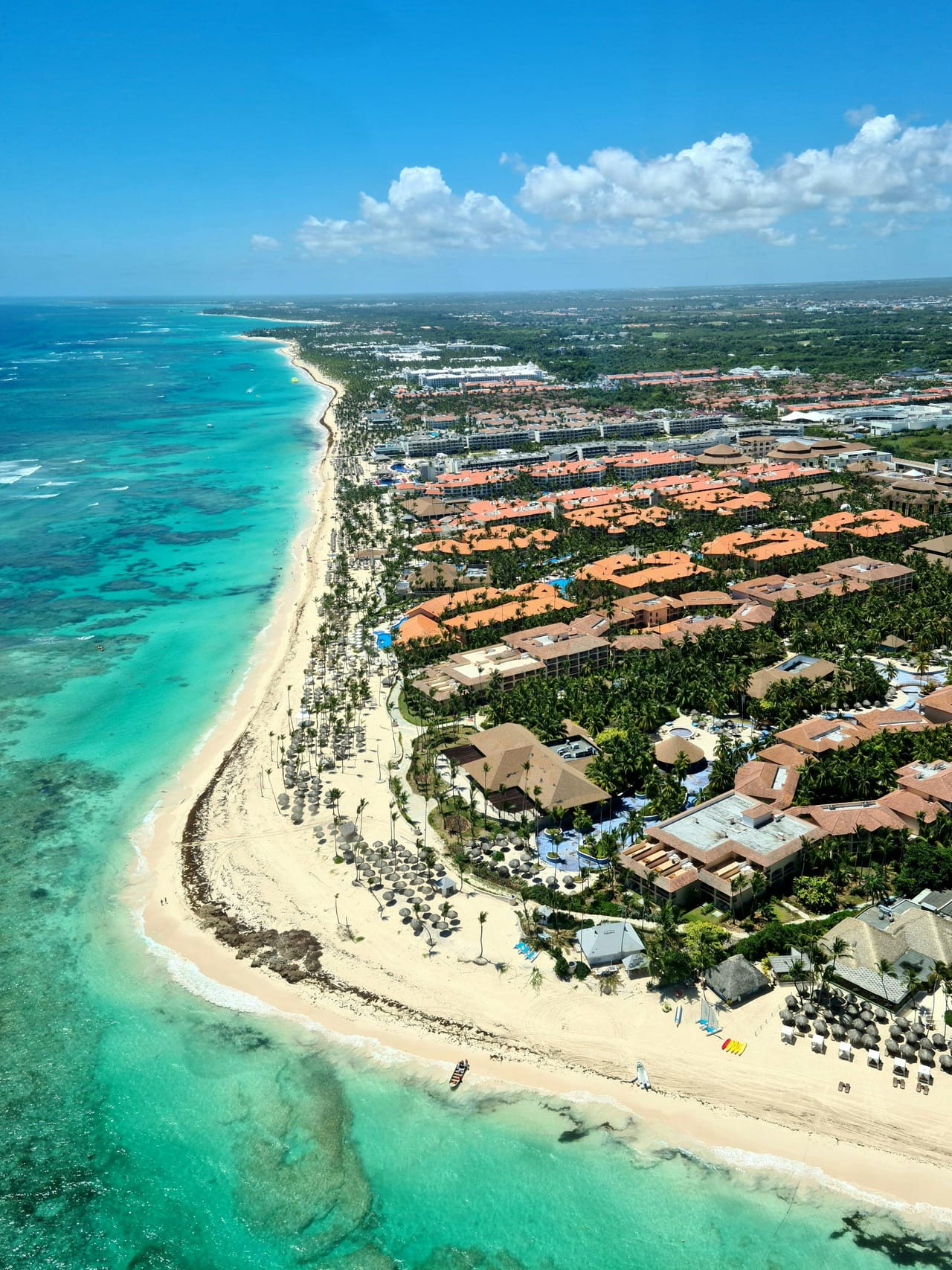
| Punta Cana / Bávaro | Bávaro is the main resort area near Punta Cana International Airport, with peak demand from December to April and the strongest flight connections in this comparison | Vacation and rental buyers who prioritize easy access | The exact area within the broad “Punta Cana” label; competing new supply; the developer’s delivery history |
| Cap Cana | A private master-planned community with a marina, golf and resort amenities near Punta Cana airport, based on the operator’s own description | Buyers who want a controlled environment and will read the community rules | Master declaration, dues, club/beach/marina rights, transfer approvals and any right of first refusal |
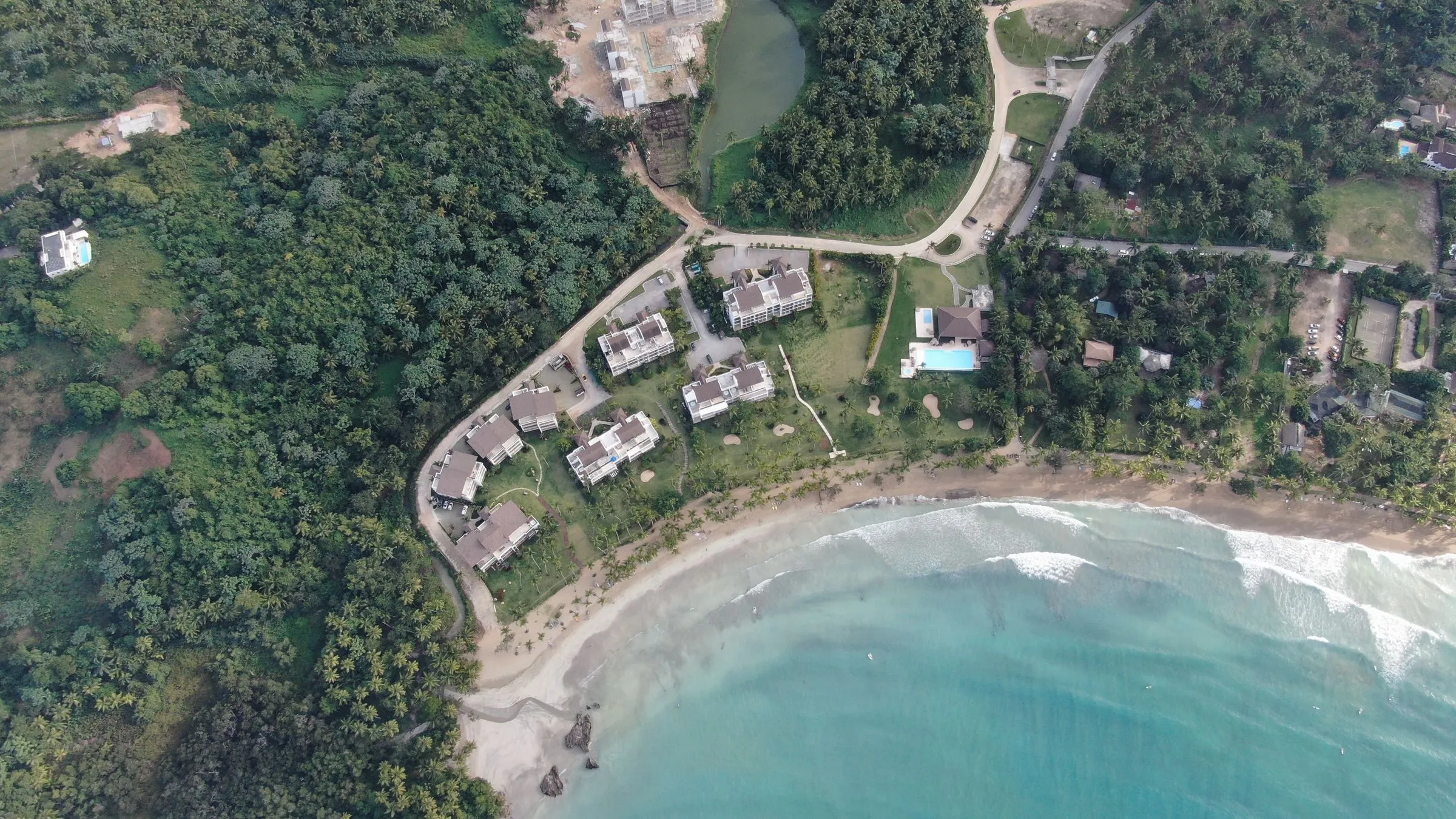
| Las Terrenas | Beach, nature and restaurant town reached by road from Santo Domingo, with fewer direct flight connections (Samaná report) | Lifestyle buyers prepared to check infrastructure for the individual property | Boundaries and title, coastal and environmental rules, water, power and access, and the limited number of comparable sales |
| Santo Domingo | The capital and main hub; year-round urban demand, flatter seasonality | Resident, business, and long-stay use; city-break rentals | Neighborhood and building over city label; condominium governance; permitted rental use |
| Puerto Plata | City, heritage and beach mix with an international airport and cruise access; demand peaks in winter | Buyers who distinguish the city, Playa Dorada and east-coast towns rather than treating them as one market | The exact neighborhood or resort area; coastal exposure, insurance and building condition |
| Cabarete | International watersports destination; busiest December to February plus a June-to-August wind season | Lifestyle-driven buyers in a specialized demand niche | Salt/wind exposure, reserves and insurance, beach rules, a narrower eventual buyer pool |
These distinctions describe how each market may suit a buyer; they are not investment rankings. The destination provides the broad demand context, while the building, title, contract and manager determine much of the individual result.
Which red flags should pause a purchase?
Any one of the following warrants a pause until it is resolved. Several unresolved issues may be sufficient reason to leave the transaction.
- The seller, landowner, and payee do not reconcile into the same verified parties.
- Only a title copy is offered, and the current status certification is “coming.”
- The deal depends on an unfinished deslinde or unit-title process with no documented route or remedy.
- The permit shown belongs to a different parcel, phase, or company.
- A material deposit is due before your lawyer has reviewed anything, or into a personal account.
- “Escrow” is advertised but the agreement cannot be produced.
- The contract lets the seller change unit, area, or delivery without a refund path.
- CONFOTUR is supported by marketing rather than a resolution, or a resale is marketed as carrying the first buyer’s exemptions.
- Rent projections are built from hotel occupancy or listing counts instead of twelve months of real net statements.
- Anyone discourages you from appointing independent counsel.
What makes a Dominican property purchase safer?
The Dominican Republic gives foreign buyers broad ownership rights, but those rights do not make every transaction safe. Before sending money, verify the exact title, current registry status, approvals, contract and payment route. A title copy is not a current registry check, an escrow label is not an escrow agreement, and a brochure is not proof of a tax exemption.
Complete the sequence with an independent Dominican lawyer and, where land boundaries or a pending deslinde are involved, a licensed surveyor.
If you’re weighing the markets, our Dominican Republic destination guide covers the areas and developments from builders that have passed our review. DSH is an education and referral platform. Buyers should still appoint their own Dominican lawyer, surveyor and tax adviser.
Disclaimer
Dream Second Home is not a law firm, tax advisory, or investment adviser, and this article is not legal, tax, or investment advice. It is an educational summary of the cited official Dominican sources as they stood on August 12, 2026, and laws, procedures, and programs change. Verify everything transaction-specific with licensed Dominican professionals before paying anyone.