

Portugal Real Estate
Portugal real estate offers an EU-regulated market with no foreign ownership restrictions, strong rule of law, and steady 5-6% appreciation. The Golden Visa real estate route is closed; the fundamentals remain.
Vetted
properties
Pre-construction and ready-to-deliver properties from developers who have passed our vetting standard.
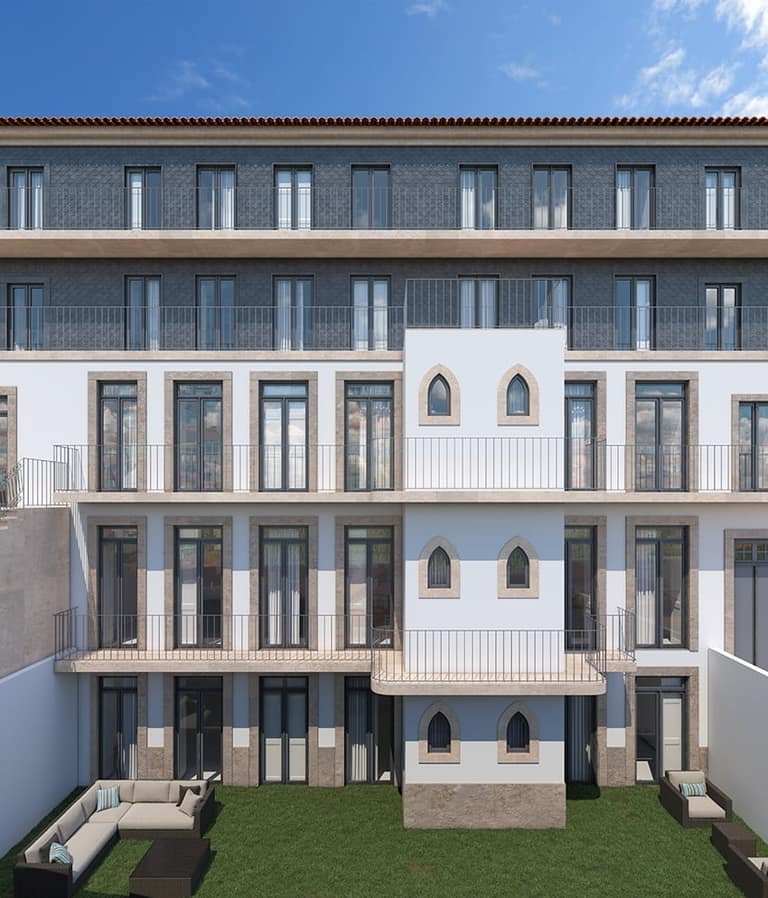
2-Bed Apartment — Porto
Call for price
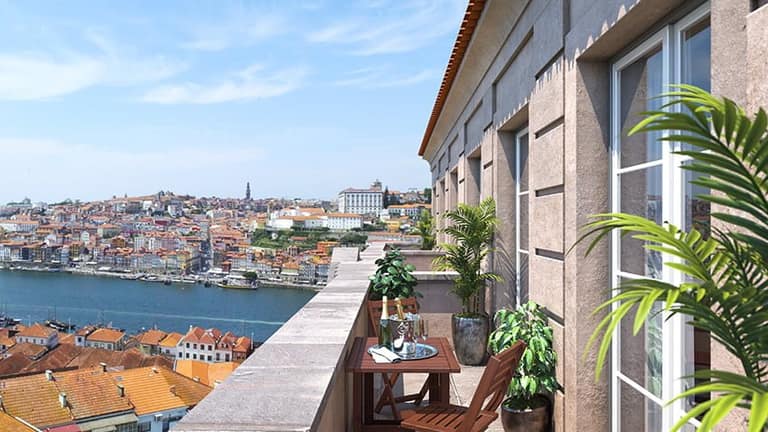
2-Bed Apartment — Vila Nova de Gaia
Call for price
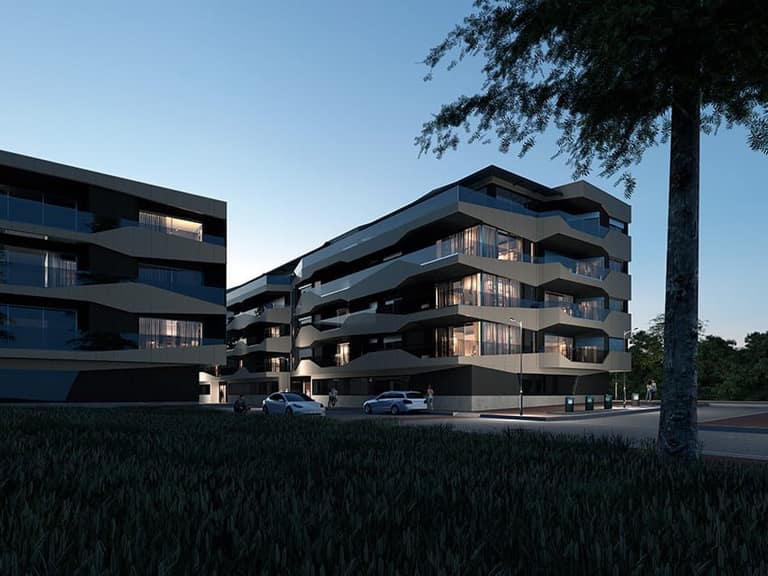
1-Bed Apartment — Viana do Castelo
From $260,000
Why investors
choose Portugal
Portugal real estate offers foreign buyers the same ownership rights as citizens, backed by EU regulatory standards and an active US-Portugal tax treaty. The Golden Visa real estate route was eliminated in October 2023, and the NHR tax regime closed to new applicants (transition ended March 2025). What remains is a mature, liquid market with 5-6% appreciation and institutional-grade legal infrastructure.
Avg. price per sqm (Porto)
YoY price appreciation (Porto)
Total purchase transaction costs
Annual international tourists
What foreign
buyers must know
Understanding the legal framework is essential for any investment in Portugal. Here are the key structures and processes.
Unrestricted Foreign Ownership
Any individual or legal entity can purchase residential or commercial real estate under the same terms as Portuguese citizens. No permits, local partnerships, or residency requirements. A Fiscal Number (NIF) is required before any transaction and can be obtained remotely via a fiscal representative. Title is registered at the Conservatoria (land registry) following execution of the deed before a notary.
Golden Visa: Real Estate Route Eliminated
As of October 2023, residential and commercial property purchases no longer qualify for Portugal's Golden Visa. The program still operates through five alternative routes, led by investment fund subscriptions at EUR 500,000 minimum. In 2024, 4,987 Golden Visas were granted, a 72% increase year-over-year, driven by the fund route. Citizenship residency requirement has been extended from 5 to 10 years as of May 2026.
NHR Closed, IFICI Is Not a Replacement for Investors
The Non-Habitual Resident tax regime closed to new applicants at the end of 2023, with a transitional registration window that ended in March 2025. Its replacement, IFICI (Tax Incentive for Scientific Research and Innovation), targets working professionals in STEM, healthcare, and green energy sectors. It requires an EQF Level 6+ degree and does not exempt foreign pension income. Typical property investors and retirees do not qualify. Portugal's tax advantages for passive income are effectively gone.
What to weigh,
and what we vet for
International buying has a few moving parts in every market. Here is what to consider in Portugal, and the standard every developer clears before we list them.
Key Considerations in Portugal
- •Foreigners buy on the same terms as citizens, and a fiscal number (NIF) is needed first.
- •The Golden Visa no longer uses real estate, though property remains a strong standalone market.
- •Short-term rental (AL) licensing is restricted in some central areas, so confirm availability.
- •The US-Portugal tax treaty provides clear double-taxation relief.
What We Vet For
- ✓Completed Project History: Proven track record of successfully delivered developments with documented on-time completion history.
- ✓Buyer Infrastructure: Legal and transaction support, financing advice, and post-sale services designed for international buyers.
- ✓Design and Build Quality: Build quality, materials, and design, reviewed at completed projects where possible.
- ✓Market Reputation: Developer claims cross-checked against public records, operating history, industry references, and local market feedback where available.
- ✓Community Amenities: Quality of shared amenities, community design, and resident services, reviewed where possible.
Every developer on this page cleared our vetting standard.


Who thrives
in Portugal
Not every market fits every investor. These profiles are where Portugal has the strongest alignment between market fundamentals and investor goals.
Golden Visa
EU mobility, alternative citizenship, tax residency benefits. Verified qualifying properties.
Explore strategy →Retirement
Healthcare proximity, stable communities, favorable climates. Verified developer delivery records.
Explore strategy →Lifestyle & Vacation
Personal use combined with short-term rental income. Curated beachfront and resort developments.
Explore strategy →Guides for
Portugal
What we have published on buying, owning, and paying tax on property in Portugal.

Buying Property in Portugal: 8 Pitfalls Foreign Buyers Discover Too Late
Read →
Can Americans Buy Property in Portugal? The NIF, Bank and Tax Steps That Stall Good Deals
Read →
Portugal Golden Visa Investment Funds: The Property Route Is Gone. What Can Still Go Wrong?
Read →Portugal
vs. alternatives
A side-by-side on the metrics that matter against markets a Portugal investor is likely also evaluating. Current data, no spin.
| Metric | Portugal | Spain | Greece |
|---|---|---|---|
| Avg. price per sqm | €3,908 | €3,100 | €3,200 |
| Annual appreciation | 5.9% | — | 8-12% |
| Foreign ownership | Direct ownership for foreigners | Direct ownership for foreigners | Direct ownership for foreigners |
| Tax/Visa advantage | Golden Visa via fund route | No foreign-ownership limits; flat 19% CGT | Golden Visa at EUR 800K |
| Best for | Retirees, lifestyle | Lifestyle, retirees | Golden Visa, pre-construction |
Investing in
Portugal
No. Real estate purchases were eliminated as a qualifying route in October 2023. The Golden Visa continues through investment fund subscriptions (EUR 500,000 minimum), company investment, cultural contributions, scientific research, or job creation. Additionally, Portugal extended the citizenship residency requirement from 5 to 10 years in May 2026. The Golden Visa still provides residency and family reunification, but the path to a Portuguese passport is now twice as long.
Buying property in Portugal costs 7-12% of the purchase price all-in. IMT (transfer tax) runs 1-8% on a progressive scale, with luxury properties above EUR 1 million taxed at a flat 7.5%. Stamp duty adds 0.8%. Notary fees are approximately 1%, and legal representation costs 1-2%. Annual IMI property tax is 0.3-0.45% of the assessed value, with an AIMI surcharge on combined Portuguese holdings exceeding EUR 600,000.
Non-resident rental income is taxed at a flat 25-28% in Portugal. Deductions are available for property management, repairs, insurance, and property tax (IMI). The US-Portugal tax treaty provides clear double taxation relief, and the Portuguese rate typically provides full offset of US tax liability on the same income via the Foreign Tax Credit. This rate is substantially higher than emerging markets like Georgia (5%) but standard for Western Europe.
Portugal is a mature, EU-regulated market where foreigners buy on the same terms as citizens. A few practical points: short-term rental (AL) licensing is restricted in some central areas, so confirm availability for your strategy; transaction costs run 7-12%, which suits a medium-term hold; and the US-Portugal tax treaty provides clear double-taxation relief. Planning the rental approach and tax structure early makes for a smooth purchase.
Explore vetted developers
in Portugal
No pressure, no obligation. Just a confidential conversation about your investment goals.