
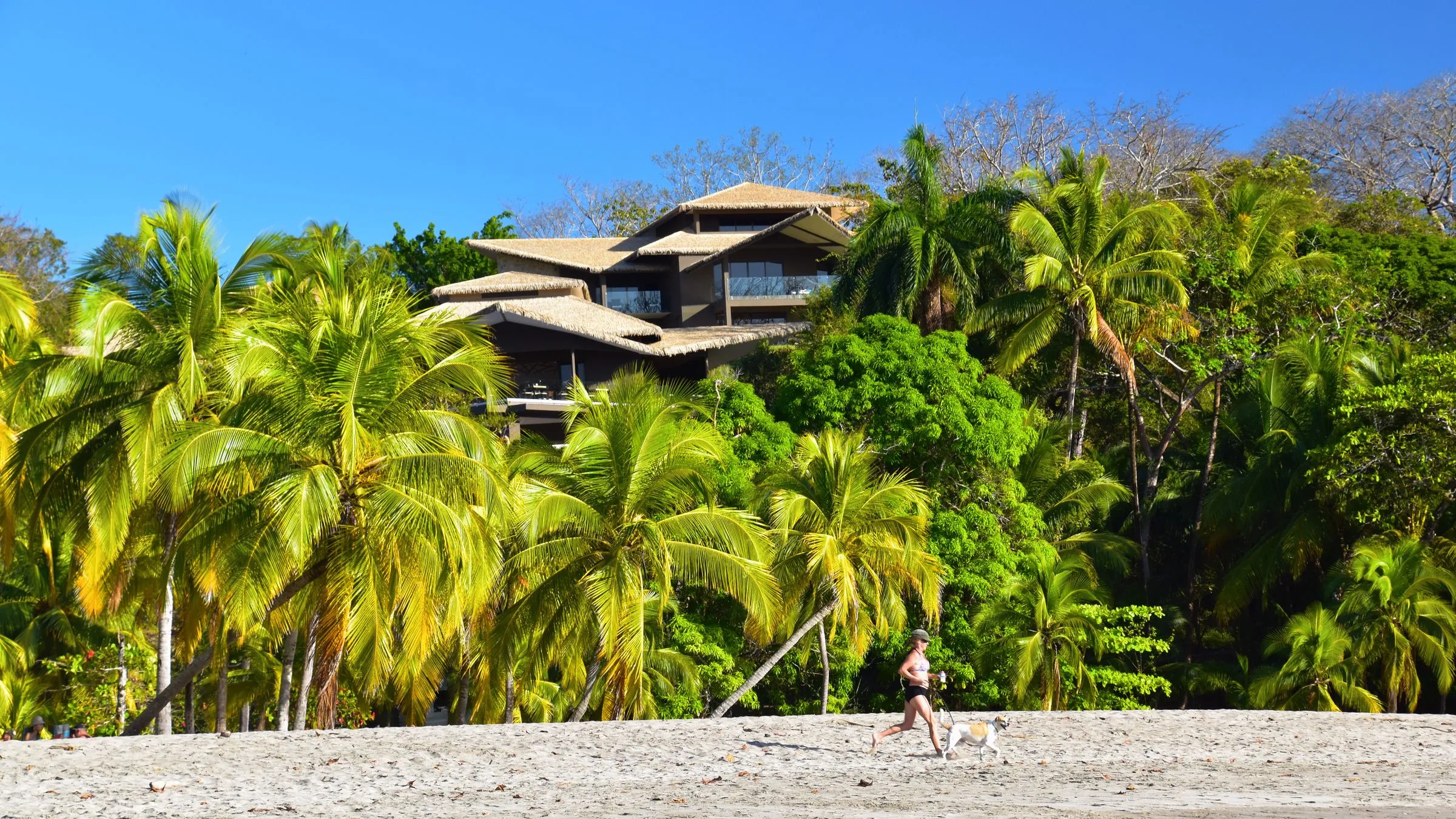
The important exception is the 200-meter coastal zone. The first 50 meters from the ordinary high-tide line are public land. The next 150 meters are generally governed by municipal concessions, which are subject to restrictions on foreign holders. Some coastal properties do have valid private title because they fall within a statutory exception, so the legal status must be checked parcel by parcel.
Everything here was verified against Costa Rican statutes on August 14, 2026.
Can an American hold direct title in Costa Rica?
Two constitutional articles do the work. Article 19 grants foreigners the same individual rights and duties as Costa Ricans (politics excepted), and Article 45 makes property inviolable without compensated expropriation. No statute adds a foreign-buyer restriction for ordinary titled land.
For ordinary titled land, the buyer can hold direct registered ownership. The coastal zone follows a separate system, which is why proximity to the beach must be identified early in the search.
The title records are equally important. The folio real is the parcel’s unique ownership record in the national registry. Since 1999, every registrable transfer must also identify a registered survey, known as the plano catastrado. The registry will not process a deed without it.
Your lawyer should obtain both the folio real and the registered survey before you commit. If the survey is unregistered or does not match the title and physical boundaries, the discrepancy needs to be resolved before the purchase proceeds.
What is Costa Rica’s 200-meter coastal zone?
The Zona Marítimo Terrestre law draws a 200-meter strip along both coastlines, measured from the ordinary high-tide line, and splits it in two.
The first 50 meters, known as the zona pública, cannot be privately owned. The statute reserves it for public use and pedestrian access and does not allow private occupation or adverse-possession claims. Mangroves and small islets also form part of the public zone.
If a building appears to extend close to the sand, ask your lawyer and surveyor to establish whether any part lies inside the public strip. A title that overlaps that area does not by itself confer private use of the overlap without the required joint authorization.
The next 150 meters, the zona restringida, runs on concessions, not ownership. Municipalities grant them for 5 to 20 years, with approval from the Costa Rican Tourism Institute required in tourism areas. The concession fee replaces the ordinary property tax, and what you hold is a renewable right to use, not full private ownership.
Concessions are a legitimate and widely used form of tenure, but they are not the same as ownership and should be valued accordingly. A coastal listing should state clearly whether it offers private title or a concession interest.
Can an American hold a coastal concession?
Article 47 of the Maritime Zone Law is the section every “beachfront for sale” conversation should start with, because it bars concessions to:
- Foreigners with fewer than five years of Costa Rican residency.
- Bearer-share companies.
- Companies domiciled abroad.
- Entities formed in Costa Rica by foreigners.
- Any entity more than 50% foreign-owned.
Share transfers that would tip a concession-holding company past that line are void, not merely voidable.
This means that a Costa Rican company formed and wholly owned by a newly arrived foreign buyer does not solve the concession restriction. A company that can lawfully hold titled property may still be ineligible to hold a coastal concession.
A newly arrived American will generally not qualify as a concession holder, either individually or through a wholly foreign-owned company. Any proposed structure should be reviewed against Article 47 before a deposit is paid.
Can beachfront property in Costa Rica have private title?
Yes, some beachfront and near-beach property has valid private title. The Maritime Zone Law does not cover every part of the coast. Article 6 excludes coastal cities, declared urban coastal zones, and properties already duly registered to private parties.
Titled homes can therefore sit close to concession parcels, sometimes along the same beach. Neither a blanket warning against all coastal ownership nor a seller’s general reassurance is enough to establish the legal status.
For a listing marketed as titled, ask which Article 6 basis applies: a pre-existing registered title, a declared urban zone, or a coastal city area. That basis should be confirmed through the registry rather than inferred from the appearance of the neighborhood.
How do the ownership checks differ by region?
No public dataset classifies parcels town by town. These are market patterns, and every one ends in the same registry check.
Guanacaste (Tamarindo, Playas del Coco): older titled parcels and concession properties can be marketed in the same coastal areas. Confirming the form of tenure should be the first legal check.
Jacó: some property may fall within urban-zone or pre-existing-title exceptions, while other parcels may be concession land. A built-up setting does not establish title on its own.
The Southern Zone (Uvita, Dominical): newer and less developed, with a higher share of concession land and property beside the maritime zone. Water is also more likely to come from a community water association than the national water utility. That moves the water certificate up your checklist.
The Central Valley (San José, Escazú): the maritime-zone rules do not apply, so the review centers on the title, survey, taxes, zoning, and any holding company.
What other checks apply to every Costa Rican purchase?
Corporate ownership. Holding titled property through a Costa Rican S.A. or S.R.L. is common and lawful, but two modern rules removed its old tricks. The transfer-tax law expressly taxes indirect transfers, so buying the company that owns the land pays the same tax as buying the land. And every property-holding entity owes annual beneficial-ownership declarations naming the real humans behind it.
Taxes. The transfer tax is a flat 1.5%, statutorily split 50/50 between the parties unless the contract reallocates it. On an illustrative US$300,000 transaction, that is US$4,500 before other closing costs. The registry will not record a deed until the tax is paid, and annual municipal property tax runs at 0.25% of registered value. Ask for an itemized estimate of notarial, stamp, and other charges.
Water. Construction and subdivision depend on a service-availability certificate from the national water utility or the local community water association. It is time-limited and parcel-specific. For rural and coastal land, a valid title does not by itself prove that the property can be developed as planned.
Escrow. Costa Rica does not impose one national escrow system on every property transaction. Funds are often held in an attorney’s trust account or by a custody provider subject to financial-supervision rules. Before wiring anything, confirm in writing who holds the money, which account is used, how the custodian is registered and what must happen before funds are released.
What should you check before buying near the coast?
For a coastal property, establish the form of tenure and the parcel’s relationship to the 200-meter zone before relying on the listing description.
- Pull the folio real and the registered plano, and match them to what is being sold.
- Establish whether any part of the parcel sits inside the 200-meter strip, and how much falls in the untouchable first 50.
- If it’s concession land, verify the current municipal concession document, the tourism authority’s approval where required, the payment status of the concession fee, and the years remaining.
- If it is held through an entity, test the structure against Article 47 and review the history of past share transfers for any invalid transaction.
- If it’s marketed as titled, identify the specific Article 6 basis in the registry.
- Obtain the current water-availability certificate, and identify who actually issues it here.
- Confirm the transfer tax, the canon or property tax, and the entity’s beneficial-ownership filing are all current.
- Put independent Costa Rican counsel and the closing notary in place before anything becomes non-refundable.
These checks require professional help, but they are far less costly than trying to correct an invalid concession structure or disputed coastal boundary later.
Ownership and residency are separate questions in Costa Rica. Buying property confers no immigration status, and what the investor-residency program actually requires (and does not guarantee) is its own moving target, Costa Rica residency by investment. The broader all-region pitfalls checklist, squatters, zoning, corporations with baggage, is likewise its own guide, Costa Rica buying pitfalls.
If Costa Rica is your market, continue with the property pitfalls that deserve a separate check and the current investor-residency rules. DSH is an education and referral platform; the registry search and the Article 47 analysis belong to your own Costa Rican lawyer, before the offer.
Disclaimer
Dream Second Home is not a law firm or tax adviser, and this article is not legal or tax advice. It is an educational summary of Costa Rica’s official legal materials, verified on August 14, 2026; Spanish texts are paraphrased. Regional descriptions are general market patterns requiring parcel-level confirmation, and the transfer-tax example is illustrative. Retain independent Costa Rican counsel before making an offer.


